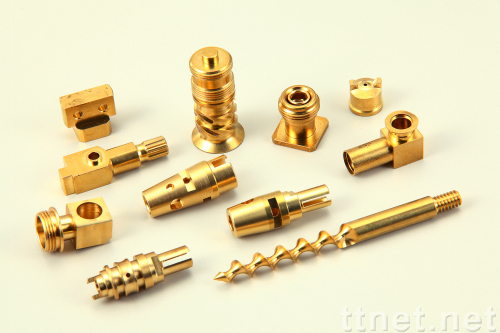
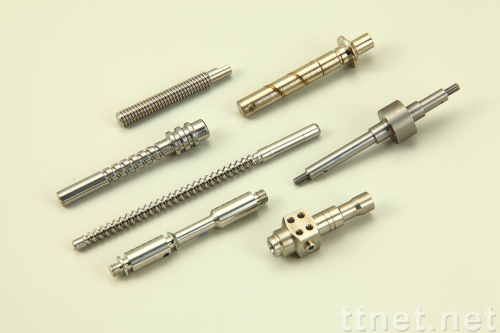
CNC Turning Parts – Precision CNC Turned Components Manufacturer in Taiwan
CNC turning parts are essential components used across modern manufacturing industries. From automotive systems and industrial machinery to electronics, medical equipment, hydraulic systems, and automation equipment, precision turned components play an important role in maintaining reliable assembly, accurate movement, and long-term product performance.
Jellom Industrial Co., Ltd. is a Taiwan-based CNC machining manufacturer specializing in CNC lathe parts, precision turned components, custom metal parts, and OEM machining solutions. We provide customized CNC turning parts according to customer drawings, specifications, materials, tolerances, and production requirements.
Whether customers need prototypes, small-batch production, or long-term mass production, CNC turning provides an efficient manufacturing solution for cylindrical and rotational precision components.
What Are CNC Turning Parts?
CNC turning parts are components manufactured by CNC lathes using a computer-controlled turning process.
During machining, the workpiece rotates while cutting tools move along programmed paths to remove material. This process can produce accurate diameters, lengths, grooves, threads, holes, and other rotational features.
Typical CNC turning operations include:
-
Facing
-
External turning
-
Internal turning
-
Drilling
-
Boring
-
Grooving
-
Threading
-
Parting
Compared with conventional manual lathe machining, CNC turning provides greater repeatability, production efficiency, and dimensional consistency.
Common Types of CNC Turning Parts
CNC turning is particularly suitable for components with cylindrical, round, or rotational geometry.
Common CNC turning parts include:
-
Shafts
-
Pins
-
Bushings
-
Sleeves
-
Spacers
-
Connectors
-
Adapters
-
Fittings
-
Couplings
-
Fasteners
-
Threaded inserts
-
Valve components
-
Hydraulic fittings
-
Pneumatic components
-
Automotive parts
-
Electronic hardware
-
Industrial machinery components
These parts can be manufactured in different sizes and materials according to customer requirements.
Custom CNC Turning Parts
Many industrial applications require custom parts rather than standard off-the-shelf components.
Custom CNC turning allows customers to specify:
-
Component dimensions
-
Materials
-
Tolerances
-
Thread types
-
Surface finish
-
Heat treatment
-
Surface treatment
-
Production quantity
-
Inspection requirements
Customers can provide 2D drawings, 3D CAD files, samples, or technical specifications for manufacturing evaluation.
Custom production is especially useful for OEM manufacturers, machine builders, product developers, and companies requiring specialized precision components.
Materials for CNC Turning Parts
Material selection affects strength, weight, corrosion resistance, conductivity, machinability, and overall cost.
Stainless Steel CNC Turning Parts
Stainless steel provides good mechanical strength, durability, and corrosion resistance.
It is widely used for:
-
Machinery parts
-
Automotive components
-
Medical equipment
-
Valves
-
Fittings
-
Food-processing equipment
-
Industrial hardware
Different stainless steel grades can be selected depending on the application.
Aluminum CNC Turning Parts
Aluminum offers low weight, good corrosion resistance, and excellent machinability.
Aluminum turned components are commonly used in:
-
Electronics
-
Automotive systems
-
Aerospace equipment
-
Industrial machinery
-
Automation systems
-
Precision assemblies
Brass CNC Turning Parts
Brass is known for good machinability and corrosion resistance.
It is commonly used for:
-
Connectors
-
Fittings
-
Valve components
-
Bushings
-
Fasteners
-
Electrical hardware
Copper CNC Turning Parts
Copper offers excellent electrical and thermal conductivity.
It is suitable for:
-
Electrical terminals
-
Connectors
-
Electronic components
-
Electrical hardware
-
Thermal-management applications
Engineering plastics and other materials may also be machined depending on project requirements.
Precision CNC Turning Parts
Precision is a critical requirement for many turned components.
A small dimensional variation can affect assembly fit, rotation, alignment, sealing, or electrical connection.
Important dimensions may include:
-
Outside diameter
-
Inside diameter
-
Overall length
-
Thread dimensions
-
Groove dimensions
-
Hole diameter
-
Shoulder dimensions
-
Concentricity
CNC machines provide computer-controlled tool movements, helping manufacturers produce repeatable components across multiple production batches.
The achievable tolerance depends on part size, geometry, material, tooling, machine capability, and inspection requirements.
CNC Turning Parts for Automotive Applications
The automotive industry uses many precision turned components.
Typical applications include:
-
Shafts
-
Bushings
-
Spacers
-
Connectors
-
Sensor components
-
Fittings
-
Fasteners
-
Transmission-related parts
Reliable repeatability is important because automotive components are often manufactured in larger production quantities.
CNC Turning Parts for Electronics
Electronic equipment frequently requires small precision components.
Examples include:
-
Terminals
-
Connectors
-
Threaded inserts
-
Spacers
-
Pins
-
Housings
-
Custom hardware
Materials such as brass, copper, aluminum, and stainless steel may be selected according to electrical and mechanical requirements.
CNC Turning Parts for Hydraulic and Pneumatic Systems
Hydraulic and pneumatic systems rely on accurately machined parts for proper connection, pressure control, and sealing.
CNC turning can produce:
-
Fittings
-
Adapters
-
Couplings
-
Valve components
-
Sleeves
-
Connectors
-
Threaded parts
Accurate threads and diameters are especially important for these applications.
OEM CNC Turning Parts
OEM manufacturers often require components made according to proprietary drawings.
A typical OEM CNC turning project may include:
-
Drawing review
-
Material confirmation
-
Manufacturing feasibility evaluation
-
CNC programming
-
Tooling preparation
-
Prototype production
-
Dimensional inspection
-
Customer approval
-
Batch production
-
Final quality inspection
-
Packaging and shipment
This approach allows customers to outsource machining while maintaining control over product specifications.
Prototype to Mass Production
CNC turning is suitable for different production quantities.
During product development, customers may require only a few prototypes for dimensional and functional testing.
After approval, the same project may move into small-batch or mass production.
CNC programs can be optimized for repeat production, improving cycle time, material utilization, tooling efficiency, and unit cost.
Quality Control for CNC Turning Parts
Quality control is essential when manufacturing precision components.
Depending on customer drawings, inspection may include:
-
Outside diameter
-
Inside diameter
-
Length
-
Hole dimensions
-
Threads
-
Grooves
-
Concentricity
-
Critical tolerances
-
Surface condition
Clear drawings and specifications help ensure that inspection focuses on the most important functional dimensions.
Advantages of CNC Turning Parts
CNC turning offers several advantages for modern industrial manufacturing.
High repeatability: CNC programs allow identical parts to be produced consistently.
Good dimensional accuracy: Controlled machine movements improve precision.
Flexible customization: Components can be manufactured according to customer drawings.
Material versatility: Stainless steel, aluminum, brass, copper, steel, and engineering plastics can be processed.
Efficient production: CNC automation supports both small batches and mass production.
Complex machining: Turning, threading, drilling, boring, and grooving can be incorporated into the machining process.
Why Choose a Taiwan CNC Turning Parts Manufacturer?
Taiwan has a mature precision manufacturing supply chain covering machine tools, automotive components, electronics, fasteners, industrial machinery, and metalworking.
Jellom Industrial Co., Ltd. provides CNC lathe parts, precision turned components, custom metal parts, and OEM machining services for international customers.
For companies searching for a long-term CNC machining supplier, working with an experienced Taiwan manufacturer can provide flexible production, engineering communication, quality control, and export support.
Your CNC Turning Parts Supplier in Taiwan
Choosing the right CNC machining supplier involves more than comparing price.
Customers should also evaluate:
-
Manufacturing experience
-
Material capability
-
Quality control
-
Customization flexibility
-
Production capacity
-
Engineering support
-
Communication
-
Delivery reliability
If you are searching for reliable CNC turning parts in Taiwan, Jellom Industrial Co., Ltd. can evaluate your drawings, materials, tolerances, quantities, and application requirements.
Send us your project information for manufacturing evaluation and quotation.
CNC Turning Parts FAQ
1. What are CNC turning parts?
CNC turning parts are components manufactured using computer-controlled lathes.
During the process, the workpiece rotates while cutting tools remove material according to programmed instructions.
The process is especially suitable for cylindrical and rotational components requiring accurate diameters, lengths, holes, threads, grooves, and other machined features.
2. What types of parts can CNC turning produce?
CNC turning can manufacture many types of components, including:
-
Shafts
-
Pins
-
Bushings
-
Sleeves
-
Spacers
-
Fittings
-
Connectors
-
Adapters
-
Couplings
-
Fasteners
-
Threaded inserts
-
Valve components
The best manufacturing process depends on part geometry and technical requirements.
3. What materials can be used for CNC turning parts?
Common materials include:
-
Stainless steel
-
Carbon steel
-
Alloy steel
-
Aluminum
-
Brass
-
Copper
-
Engineering plastics
Material selection should consider strength, corrosion resistance, weight, conductivity, machinability, and cost.
4. Can you manufacture custom CNC turning parts?
Yes.
Custom CNC turning parts can be produced according to customer drawings, CAD files, samples, dimensions, materials, tolerances, and application requirements.
Customers should provide complete technical information whenever possible to help the manufacturer evaluate machining feasibility and cost.
5. Can CNC turning parts be made from customer drawings?
Yes.
Technical drawings are commonly used as the main reference for custom machining.
A complete drawing should ideally include:
-
Dimensions
-
Tolerances
-
Material
-
Threads
-
Surface finish
-
Critical dimensions
-
Special processing requirements
3D CAD files may also be useful for complex components.
6. What is the difference between CNC turning parts and CNC milled parts?
The primary difference is the machining motion.
In CNC turning, the workpiece rotates while the cutting tool removes material.
In CNC milling, the cutting tool rotates while the workpiece is held in position.
Turning is generally better suited to cylindrical parts, while milling is often used for flat surfaces, pockets, slots, and complex non-round features.
7. Can CNC turning produce threaded parts?
Yes.
Threading is one of the most common CNC lathe operations.
CNC turning can produce both internal and external threads.
Customers should clearly specify thread type, size, pitch, and tolerance requirements on technical drawings.
8. Can you manufacture stainless steel CNC turning parts?
Yes.
Stainless steel is widely used because of its strength, durability, and corrosion resistance.
Common applications include machinery, automotive components, valves, fittings, medical equipment, food-processing equipment, and industrial hardware.
The exact stainless steel grade should be specified during quotation.
9. Can aluminum CNC turning parts be customized?
Yes.
Aluminum CNC turning parts can be customized according to dimensions, tolerances, threads, geometry, and surface requirements.
Aluminum is commonly used for electronics, automotive equipment, aerospace applications, machinery, and automation systems because of its low weight and good machinability.
10. Are brass CNC turning parts available?
Yes.
Brass is highly suitable for CNC turning because it offers good machinability.
It is widely used for connectors, fittings, valves, bushings, fasteners, electrical parts, and precision hardware.
11. Can copper parts be CNC turned?
Yes.
Copper can be CNC turned into terminals, connectors, electronic hardware, and other specialized components.
Its excellent electrical and thermal conductivity makes it particularly useful for electrical and electronic applications.
12. What tolerances can CNC turning parts achieve?
Tolerance capability depends on:
-
Component size
-
Material
-
Geometry
-
Machine capability
-
Tooling
-
Workholding
-
Machining process
-
Inspection method
There is no single tolerance suitable for every component.
Critical tolerances should be clearly specified on customer drawings for manufacturing evaluation.
13. Can CNC turning parts be used for automotive applications?
Yes.
Automotive manufacturers use turned parts for many applications, such as:
-
Shafts
-
Bushings
-
Fittings
-
Spacers
-
Connectors
-
Sensor components
-
Fasteners
-
Transmission-related parts
Repeatability and dimensional consistency are especially important for automotive production.
14. Are CNC turning parts suitable for electronics?
Yes.
Electronic equipment often requires small precision components such as:
-
Connectors
-
Terminals
-
Pins
-
Spacers
-
Threaded inserts
-
Housings
Materials such as brass, copper, aluminum, and stainless steel can be selected depending on the application.
15. Can CNC turning parts be used in hydraulic systems?
Yes.
CNC turning is commonly used to manufacture:
-
Fittings
-
Adapters
-
Couplings
-
Valve components
-
Connectors
-
Sleeves
-
Threaded parts
Accurate dimensions and threads are especially important for proper assembly and sealing.
16. Can CNC turning parts be used for medical equipment?
Yes, depending on the application.
Precision turned parts may be used in medical instruments, equipment assemblies, connectors, shafts, fittings, housings, and specialized hardware.
Customers should clearly specify material, dimensional, surface, inspection, and documentation requirements.
17. Do you provide OEM CNC turning parts?
Yes.
OEM machining allows manufacturers to outsource production of proprietary components according to their own designs.
Customers normally provide drawings, specifications, material requirements, and production quantities.
The machining supplier can then evaluate the manufacturing process and prepare the project for prototype or production.
18. Can you produce CNC turning prototypes?
Yes, depending on the project.
CNC turning is useful for prototype production because parts can often be manufactured directly from technical drawings without dedicated molds.
Prototype parts help engineers verify:
-
Dimensions
-
Assembly fit
-
Material selection
-
Mechanical performance
-
Manufacturing feasibility
Design changes can then be made before mass production.
19. Can you handle small-volume CNC turning orders?
Yes, depending on component complexity and setup requirements.
Small-volume CNC turning is suitable for:
-
Prototypes
-
Replacement parts
-
Specialized equipment
-
Automation machinery
-
Custom industrial products
CNC programming provides flexibility for limited production quantities.
20. Can CNC turning be used for mass production?
Yes.
CNC turning is well suited to repeat and mass production.
Once programs, tooling, workholding, and inspection processes are established, identical components can be produced consistently.
For higher production volumes, cycle time and production efficiency can be optimized.
21. What factors affect the cost of CNC turning parts?
The main cost factors include:
-
Raw material
-
Part size
-
Geometry
-
Machining complexity
-
Tolerances
-
Cycle time
-
Tooling
-
Setup
-
Quantity
-
Secondary processing
-
Surface treatment
-
Inspection requirements
Providing complete drawings allows a more accurate quotation.
22. Does ordering more CNC turning parts reduce the unit price?
In many cases, yes.
Programming, setup, tooling, and production preparation costs are distributed across the total order quantity.
Larger production runs may therefore reduce average unit cost.
However, material cost, machining time, and secondary processes still influence the final price.
23. What secondary processes can be added to CNC turning parts?
Depending on the component and application, secondary processes may include:
-
Deburring
-
Polishing
-
Grinding
-
Heat treatment
-
Anodizing
-
Plating
-
Passivation
-
Surface coating
Customers should specify these requirements when requesting a quotation.
24. How are CNC turning parts inspected?
Inspection depends on customer drawings and critical dimensions.
Common inspection items include:
-
Outside diameter
-
Inside diameter
-
Overall length
-
Hole size
-
Thread dimensions
-
Groove dimensions
-
Concentricity
-
Surface characteristics
Inspection frequency can be adjusted according to production quantity and quality requirements.
25. What information is needed for a CNC turning parts quotation?
Customers should ideally provide:
-
2D technical drawings
-
3D CAD files if available
-
Material grade
-
Required quantity
-
Tolerances
-
Thread specifications
-
Surface finish
-
Secondary processes
-
Inspection requirements
-
Packaging requirements
Complete project information helps reduce quotation errors and manufacturing misunderstandings.
26. How do I choose a CNC turning parts manufacturer?
Important factors include:
-
CNC machining experience
-
Material capabilities
-
Machine capabilities
-
Quality control
-
Customization flexibility
-
Prototype support
-
Production capacity
-
Engineering communication
-
Delivery reliability
-
Export experience
Price is important, but consistent quality and reliable production are equally important for long-term sourcing.
27. Why source CNC turning parts from Taiwan?
Taiwan has an established precision manufacturing industry with experience in machine tools, automotive parts, electronics, fasteners, metalworking, and industrial machinery.
Working with a Taiwan CNC turning manufacturer can provide international buyers with access to flexible custom machining and a mature industrial supply chain.
28. How can I request a quote for CNC turning parts?
Send your drawings and project requirements to Jellom Industrial Co., Ltd.
For an accurate quotation, include:
-
Material
-
Quantity
-
Tolerances
-
Threads
-
Surface finish
-
Secondary processing
-
Inspection requirements
We can evaluate your requirements for prototype, small-batch, or repeat production.
Looking for reliable CNC turning parts from Taiwan? Contact Jellom Industrial Co., Ltd. and send us your drawings for manufacturing evaluation and quotation.