Precision CNC Turning – High-Accuracy CNC Turned Parts Manufacturer in Taiwan
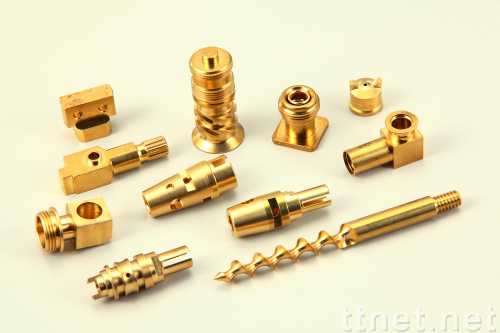 Precision is one of the most important requirements in modern manufacturing. Components used in automotive systems, aerospace equipment, medical devices, electronics, industrial machinery, hydraulic systems, and other demanding applications must be manufactured with consistent dimensions and reliable quality.
Precision CNC turning provides an efficient manufacturing solution for producing high-accuracy cylindrical and rotational components from a wide range of metals and engineering materials.
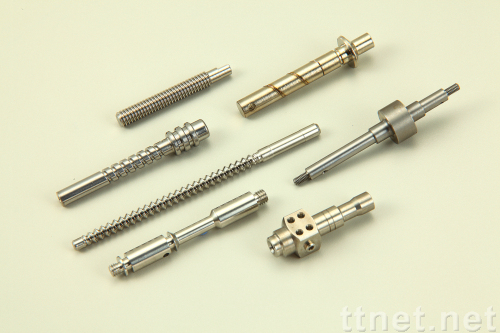
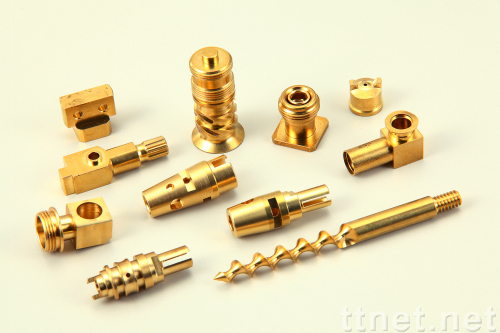
Jellom Industrial Co., Ltd. is a professional CNC machining manufacturer and exporter based in Taiwan, specializing in CNC lathe parts, precision turned components, custom-machined metal parts, and OEM CNC machining. Our manufacturing capabilities support customers requiring prototypes, custom components, small-volume production, repeat orders, and mass production.
What Is Precision CNC Turning?
Precision CNC turning is a computer-controlled machining process used to manufacture components with accurate diameters, lengths, threads, grooves, holes, and other rotational features.
During the process, a workpiece is secured inside a CNC lathe and rotated at a programmed speed. Cutting tools move along controlled paths and remove material until the required dimensions and geometry are achieved.
A CNC system can control important machining parameters such as:
-
Spindle speed
-
Cutting speed
-
Feed rate
-
Tool position
-
Cutting depth
-
Machining sequence
-
Threading operations
-
Drilling operations
-
Boring operations
-
Grooving operations
Because the machining process is computer controlled, the same component can be produced repeatedly with excellent dimensional consistency.
Why Precision Matters in CNC Turning
Many machined components are installed inside larger mechanical or electronic assemblies.
Even a small dimensional deviation can affect assembly fit, rotation, sealing, alignment, pressure control, electrical connection, or mechanical performance.
For this reason, precision CNC turning is especially valuable when manufacturers require accurate and repeatable components.
Typical critical dimensions may include:
-
Outside diameter
-
Inside diameter
-
Overall length
-
Hole diameter
-
Thread size
-
Groove width
-
Shoulder dimensions
-
Concentricity
-
Surface finish
Accurate machining helps reduce assembly problems and improves product consistency.
Precision CNC Turned Parts
CNC turning is suitable for producing a wide variety of precision components.
Common examples include:
-
Precision shafts
-
Pins
-
Bushings
-
Sleeves
-
Spacers
-
Connectors
-
Fittings
-
Adapters
-
Couplings
-
Threaded inserts
-
Fasteners
-
Valve components
-
Hydraulic fittings
-
Pneumatic components
-
Automotive parts
-
Electronic hardware
-
Industrial machinery components
The process is particularly effective for components with round, cylindrical, or rotational geometry.
Custom Precision CNC Turning
Many industrial applications require components that cannot be replaced by standard off-the-shelf parts.
Custom precision machining allows customers to manufacture components according to their own drawings, dimensions, materials, tolerances, and application requirements.
Customers may provide:
-
2D technical drawings
-
3D CAD models
-
Physical samples
-
Material specifications
-
Dimensional tolerances
-
Thread requirements
-
Surface finish requirements
-
Production quantities
-
Secondary processing requirements
Our engineering team can review these specifications and evaluate an appropriate manufacturing process.
Custom precision CNC turning provides greater flexibility for OEM manufacturers, equipment builders, product designers, and companies developing specialized mechanical assemblies.
Materials for Precision CNC Turning
Material selection is an important part of precision machining because it affects strength, durability, weight, corrosion resistance, conductivity, machinability, and cost.
Stainless Steel
Stainless steel offers excellent strength, corrosion resistance, and durability.
Precision stainless steel turned parts are commonly used in machinery, automotive components, medical equipment, food-processing systems, hydraulic systems, valves, fittings, and other industrial applications.
Aluminum
Aluminum provides low weight, good corrosion resistance, and excellent machinability.
It is frequently used for precision CNC components in electronics, aerospace equipment, automotive systems, machinery, and automation applications.
Brass
Brass provides good machinability and corrosion resistance.
It is commonly used for fittings, connectors, valves, bushings, electrical components, and other precision hardware.
Copper
Copper provides excellent electrical and thermal conductivity.
Precision copper turned parts are frequently used in electronic equipment, electrical systems, terminals, connectors, and thermal-management applications.
Engineering Plastics
Certain engineering plastics can also be machined for applications requiring low weight, electrical insulation, chemical resistance, or specialized mechanical properties.
Precision CNC Turning for Automotive Components
Automotive manufacturing requires large quantities of components with repeatable dimensions.
Precision CNC turning can produce:
-
Shafts
-
Bushings
-
Fittings
-
Connectors
-
Sensor components
-
Fasteners
-
Transmission-related components
-
Precision spacers
Consistent machining helps ensure reliable assembly and repeat production across multiple production batches.
Precision CNC Turning for Aerospace Parts
Aerospace components often require high dimensional accuracy, lightweight materials, and reliable manufacturing quality.
CNC turning can process materials such as aluminum, stainless steel, and other engineering materials according to customer specifications.
Precision machining allows manufacturers to control critical dimensions that may affect assembly, movement, or mechanical performance.
Precision CNC Turning for Medical Components
Medical devices and equipment frequently require small, accurate, and consistently manufactured parts.
Possible CNC turned components include:
-
Precision shafts
-
Connectors
-
Fittings
-
Housings
-
Instrument components
-
Equipment hardware
Material selection, tolerance requirements, and surface specifications should be clearly defined according to the intended application.
Precision CNC Turning for Electronics
Electronic products often require small precision metal components.
These may include:
-
Connectors
-
Terminals
-
Spacers
-
Threaded inserts
-
Housings
-
Pins
-
Custom hardware
Materials such as brass, copper, aluminum, and stainless steel can be selected according to mechanical and electrical requirements.
Precision CNC Turning for Hydraulic and Pneumatic Parts
Hydraulic and pneumatic systems require accurately machined components to maintain reliable pressure and fluid or air control.
Precision CNC turning can produce:
-
Fittings
-
Adapters
-
Couplings
-
Valve components
-
Connectors
-
Sleeves
-
Threaded parts
Accurate diameters and threads are especially important for components that must connect or seal correctly.
OEM Precision CNC Turning
OEM manufacturers often need proprietary components manufactured according to their own engineering drawings.
An OEM precision CNC turning service provides a practical way to outsource precision machining while maintaining control over component specifications.
A typical process may include:
-
Drawing review
-
Material confirmation
-
Manufacturing feasibility evaluation
-
CNC programming
-
Tooling preparation
-
Prototype production
-
Dimensional inspection
-
Customer approval
-
Batch or mass production
-
Final inspection
-
Packaging and shipment
This manufacturing model supports both new product development and long-term component supply.
Prototype Precision CNC Turning
Before mass production, many manufacturers require prototypes for engineering verification.
CNC turning allows functional prototypes to be manufactured directly from technical drawings.
Prototype machining helps engineers evaluate:
-
Component dimensions
-
Assembly compatibility
-
Material performance
-
Mechanical fit
-
Functional performance
-
Manufacturing feasibility
If design changes are required, machining programs can often be modified before larger production quantities are scheduled.
Small-Batch Precision CNC Turning
Not every component is required in large quantities.
Special machinery, automation equipment, laboratory systems, replacement parts, and customized industrial products may require only limited production volumes.
CNC machining provides flexibility because production does not necessarily require expensive dedicated molds or dies.
This makes precision CNC turning suitable for:
-
Prototype production
-
Low-volume production
-
Replacement components
-
Specialized machinery
-
Customized equipment
Mass Production Precision CNC Turning
Precision CNC turning is also highly suitable for repeat and mass production.
Once the CNC program, tooling, machining sequence, and inspection process have been established, components can be produced repeatedly with consistent dimensions.
For higher-volume projects, manufacturers can optimize:
-
Cycle time
-
Tool life
-
Material utilization
-
Cutting parameters
-
Inspection frequency
-
Production workflow
This can improve productivity and reduce the average manufacturing cost per component.
Quality Control in Precision CNC Turning
Quality control is essential when manufacturing high-accuracy parts.
Inspection requirements vary depending on component design and customer specifications.
Common inspection points include:
-
Outside diameter
-
Inside diameter
-
Length
-
Threads
-
Hole dimensions
-
Groove dimensions
-
Concentricity
-
Critical tolerances
-
Surface characteristics
Quality control should begin with clear technical drawings that identify critical dimensions and functional requirements.
Benefits of Precision CNC Turning
Professional precision CNC machining offers several advantages.
High accuracy: CNC machines provide precise and controlled tool movement.
Excellent repeatability: Components can be reproduced consistently across repeat orders.
Production flexibility: CNC turning supports prototypes, small batches, and mass production.
Material versatility: Stainless steel, aluminum, brass, copper, and other materials can be machined.
Custom manufacturing: Components can be produced according to customer-specific drawings.
Efficient production: Automated machining improves productivity and reduces dependence on manual operations.
Complex machining: Turning, threading, drilling, boring, and grooving can be integrated depending on machine capabilities.
Why Choose a Taiwan Precision CNC Turning Manufacturer?
Taiwan has a mature precision manufacturing ecosystem with extensive experience in machine tools, metalworking, automotive components, electronics, fasteners, and industrial machinery.
Jellom Industrial Co., Ltd. is based in Taiwan and provides CNC lathe parts, precision turned components, custom-machined metal products, and OEM/ODM manufacturing for international customers.
The company supports materials including stainless steel, aluminum, brass, copper, and engineered plastics and serves applications in automotive, aerospace, medical devices, electronics, energy, and industrial machinery.
Your Precision CNC Turning Partner in Taiwan
Selecting the right machining supplier involves more than comparing unit prices.
Customers should also evaluate:
-
Machining experience
-
Material capability
-
Quality control
-
Engineering communication
-
Customization capabilities
-
Prototype support
-
Production scalability
-
Delivery reliability
-
Export experience
Jellom Industrial Co., Ltd. provides precision CNC turning, CNC lathe parts, precision turned components, and customized machining solutions from prototype development through mass production.
If you are looking for a reliable precision CNC turning manufacturer in Taiwan, send your drawings, materials, quantities, tolerances, and application requirements for evaluation and quotation.
Precision CNC Turning FAQ
1. What is precision CNC turning?
Precision CNC turning is a computer-controlled machining process used to manufacture cylindrical or rotational parts with accurate dimensions and repeatable quality.
During the machining process, the workpiece rotates while cutting tools remove material according to programmed instructions.
Precision CNC turning is widely used to manufacture shafts, bushings, sleeves, connectors, fittings, pins, adapters, valve components, and other high-accuracy parts.
2. How does precision CNC turning work?
A workpiece is held by the CNC lathe and rotated at a programmed speed.
Cutting tools move according to CNC instructions and gradually remove material until the required geometry is produced.
Typical operations include:
-
Facing
-
External turning
-
Internal turning
-
Drilling
-
Boring
-
Grooving
-
Threading
-
Parting
Because these movements are computer controlled, dimensions can be reproduced consistently across multiple parts.
3. What is the difference between precision CNC turning and regular turning?
The basic cutting principle is similar, but precision CNC turning focuses more heavily on dimensional accuracy, repeatability, controlled tolerances, and inspection.
A general turned component may not require particularly strict tolerances.
Precision components, however, may contain critical diameters, threads, lengths, or geometric relationships that must remain within specified limits.
4. What parts are suitable for precision CNC turning?
Precision CNC turning is particularly suitable for round and cylindrical components.
Common examples include:
-
Shafts
-
Pins
-
Bushings
-
Sleeves
-
Spacers
-
Connectors
-
Fittings
-
Adapters
-
Couplings
-
Threaded parts
-
Fasteners
-
Valve components
-
Hydraulic components
-
Pneumatic components
The best manufacturing process ultimately depends on component geometry.
5. What materials can be used for precision CNC turning?
Common materials include:
-
Stainless steel
-
Carbon steel
-
Alloy steel
-
Aluminum
-
Brass
-
Copper
-
Engineering plastics
Material selection should be based on strength, corrosion resistance, weight, electrical conductivity, thermal conductivity, operating environment, and cost.
6. Can you manufacture precision stainless steel turned parts?
Yes.
Stainless steel is commonly selected for precision machining because it offers high strength, durability, and corrosion resistance.
Typical applications include machinery components, automotive parts, medical equipment, fittings, valves, food-processing equipment, and industrial hardware.
The exact stainless steel grade should be specified during quotation.
7. Can aluminum be used for precision CNC turning?
Yes.
Aluminum offers excellent machinability, relatively low weight, and good corrosion resistance.
Precision aluminum turned parts are frequently used in electronics, aerospace equipment, automotive applications, machinery, and automation systems.
Different aluminum alloys provide different mechanical characteristics, so customers should specify the required grade where possible.
8. Can you machine precision brass components?
Yes.
Brass is widely used for precision CNC turning because it offers good machinability and corrosion resistance.
It is commonly selected for fittings, connectors, valve components, bushings, threaded parts, electrical hardware, and other precision components.
9. Can copper parts be precision CNC turned?
Yes.
Copper is suitable for many CNC turning applications.
Its excellent electrical and thermal conductivity makes it particularly useful for terminals, connectors, electrical hardware, electronic components, and thermal-management applications.
Copper machining conditions may differ from other metals, so component design and material grade should be evaluated.
10. Can precision CNC turning produce threads?
Yes.
Threading is a common CNC lathe operation.
Precision turned components can contain:
-
External threads
-
Internal threads
-
Fine threads
-
Coarse threads
-
Custom thread specifications
Customers should clearly identify thread type, diameter, pitch, and tolerance requirements on their drawings.
11. What tolerances can precision CNC turning achieve?
Tolerance capability depends on:
-
Part dimensions
-
Material
-
Geometry
-
Tooling
-
Machine capability
-
Workholding
-
Machining sequence
-
Inspection method
There is no single tolerance that applies to every CNC turned part.
Customers should identify critical dimensions and required tolerances on technical drawings so the manufacturer can evaluate feasibility.
12. Why should I avoid unnecessarily tight tolerances?
Tighter tolerances can increase manufacturing costs because they may require:
-
Slower machining
-
Additional operations
-
Specialized tooling
-
More frequent inspection
-
Additional measuring equipment
-
Greater process control
For this reason, tight tolerances should generally be specified only for dimensions where they are functionally necessary.
13. Can you manufacture precision CNC parts according to drawings?
Yes.
Precision CNC machining is normally based on customer-provided technical drawings.
Drawings should ideally include:
-
Dimensions
-
Tolerances
-
Materials
-
Threads
-
Surface requirements
-
Critical dimensions
-
Secondary processing instructions
Customers may also provide 3D CAD models to support engineering evaluation.
14. Can you produce precision CNC turning prototypes?
Yes, depending on the project.
CNC turning is particularly useful for producing functional prototypes directly from digital drawings.
Prototype parts can help verify:
-
Dimensions
-
Assembly fit
-
Mechanical function
-
Material selection
-
Design feasibility
-
Manufacturing feasibility
Changes can then be implemented before mass production begins.
15. Is precision CNC turning suitable for small quantities?
Yes.
CNC machining can support low-volume production because it relies on programmable machine tools rather than dedicated molds for every component.
Small quantities may be suitable for:
-
Specialized machinery
-
Replacement parts
-
New product development
-
Automation equipment
-
Laboratory equipment
-
Custom industrial components
The economic production quantity depends on setup time, machining complexity, and other factors.
16. Can precision CNC turning be used for mass production?
Yes.
CNC turning is highly effective for repeat production because established programs and tooling can be used to manufacture identical parts consistently.
For higher-volume orders, cycle time, tool life, material preparation, and inspection processes can be optimized to improve efficiency.
17. What industries require precision CNC turning?
Many industries use precision turned components, including:
-
Automotive
-
Aerospace
-
Medical devices
-
Electronics
-
Industrial machinery
-
Factory automation
-
Hydraulic equipment
-
Pneumatic equipment
-
Energy
-
Construction equipment
Any product requiring accurate cylindrical components may potentially benefit from precision CNC turning.
18. What automotive parts can be precision CNC turned?
Typical automotive applications may include:
-
Shafts
-
Bushings
-
Spacers
-
Fittings
-
Connectors
-
Fasteners
-
Sensor components
-
Transmission-related components
-
Custom mechanical parts
The actual component requirements depend on the automotive system and customer specification.
19. Is precision CNC turning suitable for aerospace components?
Yes.
CNC turning is commonly used to manufacture specialized aerospace components requiring controlled dimensions and consistent quality.
Materials such as aluminum and stainless steel may be used depending on weight, strength, corrosion resistance, and application requirements.
Manufacturing and inspection requirements should be clearly defined by the customer.
20. Can precision CNC turning be used for medical device components?
Yes.
Precision turning may be used for certain components in medical equipment and instruments.
These can include shafts, connectors, fittings, housings, and custom hardware.
Because medical applications may have specialized requirements, customers should clearly specify materials, tolerances, surface conditions, documentation, and other relevant standards.
21. Can precision CNC turning produce hydraulic and pneumatic components?
Yes.
CNC turning is particularly suitable for producing fittings, adapters, couplings, valve components, connectors, sleeves, and threaded components.
Precision is important because hydraulic and pneumatic components often depend on accurate dimensions and connections to achieve proper assembly and sealing.
22. Do you provide OEM precision CNC turning?
Yes.
OEM precision CNC machining allows customers to manufacture proprietary components according to their own drawings and specifications.
A project can involve:
-
Prototype development
-
Material sourcing
-
CNC machining
-
Secondary operations
-
Inspection
-
Packaging
-
Repeat production
This allows customers to work with a dedicated machining supplier rather than investing in all manufacturing equipment internally.
23. What information is needed for a precision CNC turning quotation?
For an accurate quotation, provide:
-
2D drawings
-
3D CAD models if available
-
Material and material grade
-
Required quantity
-
Tolerances
-
Thread specifications
-
Surface finish
-
Heat treatment
-
Surface treatment
-
Inspection requirements
-
Packaging requirements
-
Estimated annual volume
Complete technical information helps the manufacturer evaluate machining time, tooling, material requirements, inspection, and production costs.
24. What factors affect precision CNC turning cost?
CNC turning prices depend on several factors:
-
Raw material
-
Part dimensions
-
Component geometry
-
Required tolerances
-
Machining complexity
-
Cycle time
-
Tooling
-
Setup requirements
-
Order quantity
-
Surface treatment
-
Secondary operations
-
Inspection requirements
A component requiring tight tolerances and multiple machining operations generally costs more than a simple part with standard dimensional requirements.
25. Does production quantity affect the unit price?
Yes, in many cases.
Programming, tooling setup, material preparation, and machine setup create costs before production begins.
When those costs are distributed across larger quantities, the average unit price may decrease.
Higher production volumes may also allow cycle times and manufacturing processes to be optimized.
26. How is precision CNC turning quality controlled?
Quality control begins with understanding the technical drawing.
Depending on part requirements, inspection may include:
-
Outside diameter
-
Inside diameter
-
Length
-
Hole size
-
Thread dimensions
-
Groove width
-
Concentricity
-
Critical tolerances
-
Surface characteristics
Inspection frequency and measurement methods should be established according to customer requirements and production volume.
27. What secondary processes can be added after CNC turning?
Depending on the material and application, additional processes may include:
-
Deburring
-
Polishing
-
Grinding
-
Heat treatment
-
Anodizing
-
Plating
-
Passivation
-
Surface coating
Secondary processing requirements should be specified during quotation so the complete production process can be evaluated.
28. What is the difference between precision CNC turning and CNC milling?
The main difference is the cutting motion.
During CNC turning, the workpiece typically rotates while the cutting tool removes material.
During CNC milling, the cutting tool rotates while the workpiece remains secured.
Turning is generally suitable for cylindrical parts, while milling is often used for flat surfaces, pockets, slots, and complex non-rotational features.
Some precision components require both processes.
29. How should I select a precision CNC turning supplier?
Consider more than price when evaluating manufacturers.
Important factors include:
-
Precision machining experience
-
Machine capabilities
-
Material knowledge
-
Quality control
-
Engineering support
-
Customization capability
-
Prototype support
-
Production scalability
-
Communication
-
Delivery reliability
-
Export experience
A capable supplier should understand your drawings and be able to recommend a practical production approach.
30. Why choose a Taiwan precision CNC turning manufacturer?
Taiwan has a mature manufacturing supply chain covering CNC machine tools, precision machining, electronics, automotive parts, fasteners, and industrial equipment.
Jellom Industrial Co., Ltd. is a Taiwan manufacturer specializing in CNC lathe parts, precision turned components, custom-machined metal products, and OEM/ODM machining for international customers.
This makes Taiwan a practical sourcing option for companies looking for long-term precision component manufacturing.
31. How can I request a precision CNC turning quote?
Send Jellom Industrial Co., Ltd. your technical drawings and project specifications.
For a more accurate quotation, include:
-
Material
-
Quantity
-
Required tolerances
-
Thread specifications
-
Surface finish
-
Secondary processing
-
Inspection requirements
Our team can evaluate your project for prototype manufacturing, small-batch production, repeat orders, or larger production quantities.
Looking for a reliable precision CNC turning supplier in Taiwan? Contact Jellom Industrial Co., Ltd. and send us your drawings for manufacturing evaluation and quotation.