 CNC Turned Parts Manufacturer – Precision CNC Machining Supplier in Taiwan
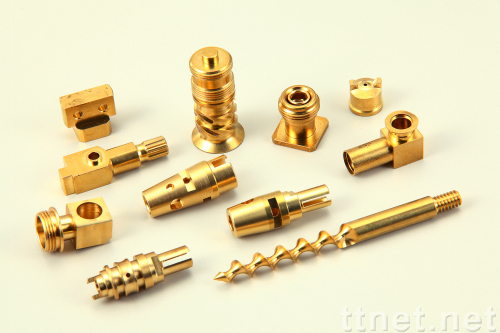
Choosing the right CNC turned parts manufacturer is an important decision for companies that require precision, consistency, customization, and reliable long-term supply. CNC turned components are widely used in automotive systems, aerospace equipment, electronics, medical devices, hydraulic and pneumatic systems, industrial machinery, and many other precision applications.
Jellom Industrial Co., Ltd. is a professional CNC machining manufacturer and exporter based in Taiwan, specializing in CNC lathe parts, precision turned components, custom-machined metal products, and OEM CNC machining. We provide customized manufacturing solutions according to customer drawings, materials, tolerances, quantities, and application requirements.
From prototype development and small-batch production to repeat orders and mass production, working with an experienced CNC turned parts manufacturer can help customers improve product quality, reduce sourcing risks, and achieve more consistent manufacturing results.
What Does a CNC Turned Parts Manufacturer Do?
A CNC turned parts manufacturer produces precision components using computer-controlled CNC lathes.
During CNC turning, the workpiece rotates while cutting tools remove material according to programmed instructions. This process is particularly suitable for cylindrical, round, and rotational components.
Typical CNC turning operations include:
-
Facing
-
External turning
-
Internal turning
-
Drilling
-
Boring
-
Grooving
-
Threading
-
Knurling
-
Parting
Depending on the equipment and component design, additional milling or secondary machining processes may also be integrated into production.
Compared with conventional manual machining, CNC turning offers better repeatability and makes it easier to reproduce identical components across multiple production batches.
Types of CNC Turned Parts
A professional CNC turned parts manufacturer can produce a wide range of customized components.
Typical parts include:
-
Shafts
-
Pins
-
Bushings
-
Sleeves
-
Spacers
-
Fittings
-
Connectors
-
Adapters
-
Couplings
-
Fasteners
-
Threaded inserts
-
Valve components
-
Hydraulic fittings
-
Pneumatic components
-
Sensor components
-
Automotive parts
-
Electronic hardware
-
Industrial machinery parts
The exact manufacturing method depends on component geometry, dimensions, material, tolerance requirements, and order quantity.
Custom CNC Turned Parts
Many industrial customers require components that cannot be purchased as standard off-the-shelf products.
A custom CNC turned parts manufacturer can manufacture parts according to customer-specific engineering drawings.
Customers may provide:
-
2D technical drawings
-
3D CAD models
-
Material specifications
-
Dimensions
-
Tolerances
-
Thread requirements
-
Surface finish requirements
-
Production quantities
-
Secondary treatment requirements
This provides greater design flexibility and allows components to be optimized for a particular machine, product, or assembly.
Custom manufacturing is especially useful for OEM and ODM applications where part dimensions and specifications are unique.
Materials Used for CNC Turned Parts
Material selection plays an important role in product performance.
Jellom Industrial works with a variety of materials commonly used for CNC machining.
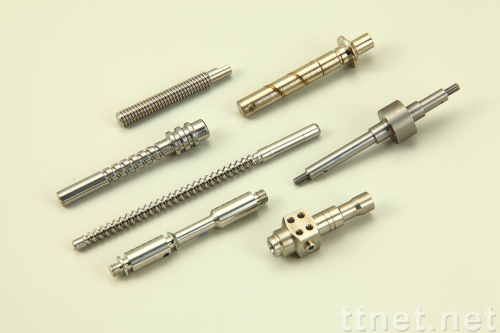
Stainless Steel CNC Turned Parts
Stainless steel offers excellent corrosion resistance, mechanical strength, and durability.
Typical applications include:
-
Industrial machinery
-
Automotive components
-
Medical equipment
-
Fittings
-
Valves
-
Food-processing equipment
-
Precision hardware
Different stainless steel grades have different characteristics and should be selected according to the final application.
Aluminum CNC Turned Parts
Aluminum provides low weight, good corrosion resistance, and excellent machinability.
It is commonly used for:
-
Electronics
-
Automotive systems
-
Aerospace applications
-
Automation equipment
-
Industrial machinery
-
Precision assemblies
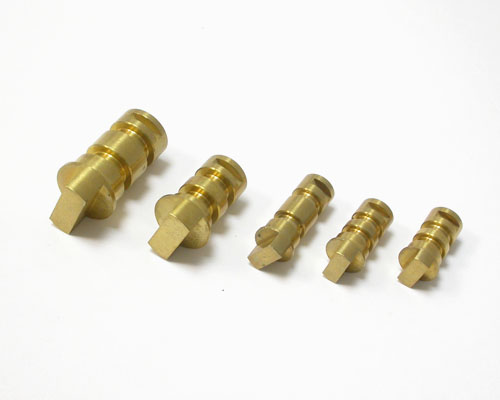
Brass CNC Turned Parts
Brass offers good machinability and corrosion resistance.
It is frequently used for:
-
Fittings
-
Connectors
-
Bushings
-
Valves
-
Electrical components
-
Fasteners
Copper CNC Turned Parts
Copper provides excellent electrical and thermal conductivity.
It is commonly selected for:
-
Electrical contacts
-
Terminals
-
Connectors
-
Electronic hardware
-
Thermal-management components
Engineering plastics and additional metals may also be machined depending on customer requirements.
Precision CNC Turned Components
Precision is one of the most important reasons companies outsource parts to an experienced CNC manufacturer.
Critical dimensions can include:
-
Outside diameter
-
Inside diameter
-
Overall length
-
Hole diameter
-
Thread dimensions
-
Groove dimensions
-
Shoulder dimensions
-
Concentricity
A small dimensional deviation may affect assembly, alignment, sealing, rotation, electrical contact, or overall product performance.
A professional CNC turned parts manufacturer must therefore combine CNC machining with effective inspection and process control.
CNC Turned Parts for Automotive Applications
The automotive industry uses large numbers of precision-machined components.
Typical CNC turned automotive parts may include:
-
Shafts
-
Bushings
-
Fittings
-
Connectors
-
Sensor components
-
Fasteners
-
Valve parts
-
Transmission-related components
Repeatability is especially important for automotive manufacturing because identical components must often be produced across recurring production batches.
CNC Turned Parts for Aerospace Applications
Aerospace applications frequently require components with accurate dimensions, consistent material quality, and reliable manufacturing.
Depending on design requirements, CNC turning can be used to manufacture:
-
Precision shafts
-
Fittings
-
Connectors
-
Fasteners
-
Spacers
-
Custom mechanical components
Materials may include aluminum, stainless steel, and other engineering materials depending on the application.
CNC Turned Parts for Medical Equipment
Medical equipment can require small and accurate components.
Potential applications include:
-
Precision shafts
-
Connectors
-
Fittings
-
Instrument parts
-
Housings
-
Small mechanical components
Customers should clearly specify material, tolerance, surface, inspection, and documentation requirements for medical applications.
CNC Turned Parts for Electronics
Electronics and electrical equipment often contain small precision metal parts.
These may include:
-
Pins
-
Terminals
-
Connectors
-
Spacers
-
Threaded inserts
-
Housings
-
Custom hardware
Brass and copper are often selected when electrical conductivity is required, while aluminum and stainless steel may be used for structural or mechanical applications.
OEM CNC Turned Parts Manufacturing
OEM manufacturers often require proprietary components made according to their own engineering specifications.
A typical OEM manufacturing process may include:
-
Drawing review
-
Material confirmation
-
Manufacturing feasibility analysis
-
CNC programming
-
Tooling preparation
-
Prototype or sample production
-
Dimensional inspection
-
Customer approval
-
Batch production
-
Final inspection
-
Packaging and shipment
Jellom Industrial provides OEM and ODM solutions from prototype development through mass production. This allows customers to work with one machining partner throughout different stages of product development.
Prototype to Mass Production
An experienced CNC turned parts manufacturer should be able to support different production volumes.
During product development, customers may require only prototypes or small quantities.
Prototype CNC turning allows engineers to evaluate:
-
Dimensions
-
Assembly fit
-
Mechanical function
-
Material selection
-
Design feasibility
-
Manufacturing feasibility
After approval, CNC programs and machining processes can be optimized for repeat or mass production.
Quality Control for CNC Turned Parts
Quality control is essential in CNC machining.
Depending on customer specifications, inspection may include:
-
Diameter
-
Length
-
Hole size
-
Thread dimensions
-
Groove dimensions
-
Concentricity
-
Critical tolerances
-
Surface condition
The inspection method should be selected according to part complexity and technical requirements.
Clear engineering drawings help ensure that critical functional dimensions receive appropriate attention.
How to Choose a CNC Turned Parts Manufacturer
When comparing suppliers, price should not be the only consideration.
Important factors include:
-
CNC machining experience
-
Material capability
-
Production equipment
-
Quality control
-
Engineering support
-
Customization flexibility
-
Prototype capability
-
Production capacity
-
Communication
-
Delivery reliability
-
Export experience
The right supplier should understand both the engineering drawing and the intended application of the component.
Why Choose a Taiwan CNC Turned Parts Manufacturer?
Taiwan has a mature precision manufacturing supply chain supporting CNC machine tools, metalworking, electronics, automotive parts, fasteners, and industrial machinery.
Jellom Industrial Co., Ltd. is based in Taiwan and specializes in CNC lathe parts, precision turned components, and custom-machined metal products for international customers. The company also provides OEM and ODM solutions from prototype development through mass production.
For international buyers seeking a reliable long-term manufacturing partner, Taiwan provides access to experienced machining capabilities and an established industrial supply chain.
Your CNC Turned Parts Manufacturer in Taiwan
Choosing the right CNC turned parts manufacturer can help improve component quality, production consistency, and supply-chain reliability.
Jellom Industrial Co., Ltd. provides precision CNC turning and customized machining solutions for automotive, aerospace, medical, electronics, energy, and industrial applications. The company works with stainless steel, aluminum, brass, copper, engineered plastics, and other suitable materials according to project requirements.
If you are looking for a reliable CNC turned parts manufacturer in Taiwan, send your drawings, material specifications, quantities, tolerances, and application requirements for manufacturing evaluation and quotation.
CNC Turned Parts Manufacturer FAQ
1. What is a CNC turned parts manufacturer?
A CNC turned parts manufacturer is a company that produces precision components using CNC lathes and related machining equipment.
The manufacturer converts raw materials such as stainless steel, aluminum, brass, or copper into finished components according to customer drawings.
Typical parts include shafts, pins, bushings, sleeves, fittings, connectors, fasteners, and other cylindrical components.
2. What types of CNC turned parts can a manufacturer produce?
A CNC turned parts manufacturer can produce:
-
Shafts
-
Pins
-
Bushings
-
Sleeves
-
Spacers
-
Fittings
-
Connectors
-
Adapters
-
Couplings
-
Fasteners
-
Threaded components
-
Valve parts
-
Hydraulic components
The exact machining capability depends on equipment, material, part geometry, and tolerance requirements.
3. Can CNC turned parts be customized?
Yes.
Custom manufacturing is one of the primary advantages of CNC machining.
Customers can specify:
-
Dimensions
-
Material
-
Tolerances
-
Threads
-
Surface finish
-
Heat treatment
-
Surface treatment
-
Quantity
-
Inspection requirements
Custom parts are commonly manufactured directly from technical drawings.
4. Can you manufacture parts from customer drawings?
Yes.
Customer drawings are typically the primary reference for precision machining projects.
2D drawings should clearly indicate:
-
Dimensions
-
Tolerances
-
Material
-
Threads
-
Surface requirements
-
Critical dimensions
3D CAD models can also help manufacturers understand complex part geometry.
5. What materials can a CNC turned parts manufacturer machine?
Common materials include:
-
Stainless steel
-
Carbon steel
-
Alloy steel
-
Aluminum
-
Brass
-
Copper
-
Engineering plastics
The appropriate material depends on strength, corrosion resistance, weight, conductivity, operating environment, and product requirements.
6. Can you manufacture stainless steel CNC turned parts?
Yes.
Stainless steel is widely used because it provides strength, corrosion resistance, and durability.
Applications include industrial machinery, medical equipment, automotive components, valves, fittings, connectors, and precision mechanical parts.
Customers should specify the required stainless steel grade.
7. Can you produce aluminum CNC turned parts?
Yes.
Aluminum offers good machinability and relatively low weight.
It is widely used for electronic equipment, automotive systems, aerospace applications, automation machinery, and lightweight mechanical components.
Different aluminum alloys can be selected according to product requirements.
8. Can brass parts be CNC turned?
Yes.
Brass is particularly suitable for CNC turning because of its excellent machinability.
Typical brass turned components include:
-
Fittings
-
Connectors
-
Bushings
-
Valves
-
Fasteners
-
Electrical parts
Its corrosion resistance also makes brass suitable for many industrial applications.
9. Can copper parts be CNC turned?
Yes.
Copper can be machined into electrical terminals, connectors, contacts, and other precision components.
It is especially useful in electronic and electrical applications because of its excellent conductivity.
Different copper alloys may require different machining conditions.
10. What industries use CNC turned parts?
CNC turned parts are widely used in:
-
Automotive
-
Aerospace
-
Medical equipment
-
Electronics
-
Energy
-
Industrial machinery
-
Factory automation
-
Hydraulic systems
-
Pneumatic systems
Any industry requiring accurate cylindrical components may potentially use CNC turning.
11. What is the difference between CNC turned parts and CNC milled parts?
CNC turned parts are normally manufactured while the workpiece rotates.
CNC milled parts are generally produced using a rotating cutting tool while the workpiece remains fixed or moves along programmed axes.
Turning is particularly suitable for cylindrical components, while milling is often used for flat surfaces, pockets, slots, and irregular geometries.
Some components require both processes.
12. Can a CNC turned parts manufacturer produce threaded components?
Yes.
Internal and external threading are common CNC turning operations.
Customers should specify:
-
Thread type
-
Diameter
-
Pitch
-
Thread length
-
Required tolerance
Thread specifications should be clearly shown on engineering drawings.
13. What tolerances can a CNC turned parts manufacturer achieve?
Tolerance capability depends on several factors:
-
Part dimensions
-
Material
-
Geometry
-
Machine capability
-
Tooling
-
Workholding
-
Machining process
-
Inspection method
There is no single tolerance applicable to every CNC turned part.
Customers should specify critical tolerances so the manufacturer can evaluate feasibility.
14. Can you manufacture prototype CNC turned parts?
Yes, depending on the project.
Prototype manufacturing allows customers to verify:
-
Dimensions
-
Assembly fit
-
Material selection
-
Product function
-
Design feasibility
-
Manufacturing feasibility
After prototypes are approved, the machining program can be optimized for production.
15. Do CNC turned parts manufacturers accept small orders?
Many CNC machining projects can support small production quantities.
Small-volume manufacturing is often suitable for:
-
Prototypes
-
Specialized machinery
-
Replacement parts
-
Product development
-
Automation equipment
-
Custom industrial products
The most economical quantity depends on setup requirements and component complexity.
16. Can CNC turned parts be mass produced?
Yes.
CNC turning is highly suitable for repeat production.
Once the machining program, tooling, and setup have been established, identical parts can be produced repeatedly.
For larger volumes, manufacturers can optimize cycle time and tooling to improve efficiency.
17. Do you provide OEM CNC turned parts?
Yes.
OEM machining allows customers to outsource production of proprietary components according to their own technical specifications.
OEM projects can include:
-
Material sourcing
-
Prototype machining
-
CNC production
-
Secondary processing
-
Inspection
-
Packaging
-
Repeat production
This allows manufacturers to focus on product design and sales while working with a specialized CNC supplier.
18. What information is required for a CNC turned parts quotation?
Customers should provide:
-
2D drawings
-
3D CAD models if available
-
Material and grade
-
Required quantity
-
Dimensional tolerances
-
Thread specifications
-
Surface finish
-
Secondary treatment
-
Inspection requirements
-
Estimated annual quantity
Complete technical information helps the manufacturer prepare a more accurate quotation.
19. What factors affect the price of CNC turned parts?
Important cost factors include:
-
Raw material
-
Part size
-
Geometry
-
Tolerances
-
Machining complexity
-
Cycle time
-
Setup time
-
Tooling
-
Production quantity
-
Secondary processing
-
Surface treatment
-
Inspection requirements
More complex components generally require more machining time and therefore have higher production costs.
20. Does ordering more parts reduce the unit cost?
In many cases, yes.
Programming, setup, and tooling create initial production costs.
When these costs are distributed across a larger number of components, the average unit cost can decrease.
Larger quantities may also allow manufacturers to optimize cycle time and production flow.
21. How are CNC turned parts inspected?
Depending on customer requirements, inspection may include:
-
Outside diameter
-
Inside diameter
-
Overall length
-
Hole dimensions
-
Thread dimensions
-
Groove dimensions
-
Concentricity
-
Surface characteristics
The inspection method should be selected according to the drawing and required tolerances.
22. What secondary processes can be applied to CNC turned parts?
Depending on material and application, possible secondary processes include:
-
Deburring
-
Polishing
-
Grinding
-
Heat treatment
-
Anodizing
-
Plating
-
Passivation
-
Surface coating
Customers should specify these processes when requesting a quotation.
23. How do I evaluate a CNC turned parts manufacturer?
Important evaluation criteria include:
-
Manufacturing experience
-
Machine capabilities
-
Material expertise
-
Quality control
-
Engineering support
-
Custom machining experience
-
Production capacity
-
Prototype support
-
Communication
-
Delivery performance
For international sourcing, export experience is also valuable.
24. Why is quality control important for CNC turned parts?
Precision components must fit correctly into larger assemblies.
Dimensional problems can result in:
-
Assembly difficulty
-
Poor alignment
-
Leakage
-
Excessive wear
-
Mechanical failure
-
Electrical connection problems
Effective inspection helps identify dimensional problems before parts reach the customer's assembly line.
25. Why choose a Taiwan CNC turned parts manufacturer?
Taiwan has a strong CNC machine tool and precision metalworking industry.
Its manufacturing ecosystem supports automotive components, electronics, machinery, fasteners, and other precision industries.
For global buyers, a Taiwan CNC turned parts manufacturer can provide access to experienced machining capabilities and flexible OEM production.
26. Does Jellom provide OEM and ODM CNC machining?
Yes.
Jellom Industrial Co., Ltd. states that it provides OEM and ODM machining solutions and works with customers from prototype development through mass production.
This allows customers to develop customized components and maintain long-term production through the same manufacturing partner.
27. What materials does Jellom Industrial work with?
Jellom Industrial states that its product range includes stainless steel, aluminum, brass, copper, and engineered plastics.
The appropriate material should be selected according to the component's mechanical, environmental, and functional requirements.
28. What industries does Jellom Industrial serve?
The company identifies automotive, aerospace, medical devices, electronics, energy, and industrial machinery among its primary application sectors.
Custom CNC manufacturing allows component specifications to be adapted to different industry requirements.
29. Can a CNC turned parts manufacturer support repeat orders?
Yes.
One of the advantages of CNC machining is that established programs can be reused for repeat production.
Manufacturers can maintain records of tooling, machining parameters, and inspection requirements to improve consistency across future orders.
Repeat production is particularly important for OEM customers requiring long-term component supply.
30. How do I request a CNC turned parts quotation?
Prepare your engineering drawings and project information before contacting the manufacturer.
For an accurate quotation, include:
-
Material
-
Quantity
-
Dimensions
-
Tolerances
-
Threads
-
Surface finish
-
Secondary treatment
-
Inspection requirements
Jellom Industrial Co., Ltd. can evaluate your project for prototype development, small-batch production, or mass production.
Looking for a reliable CNC turned parts manufacturer in Taiwan? Send us your drawings and specifications for manufacturing evaluation and quotation.